
A way of eating, with a different balance
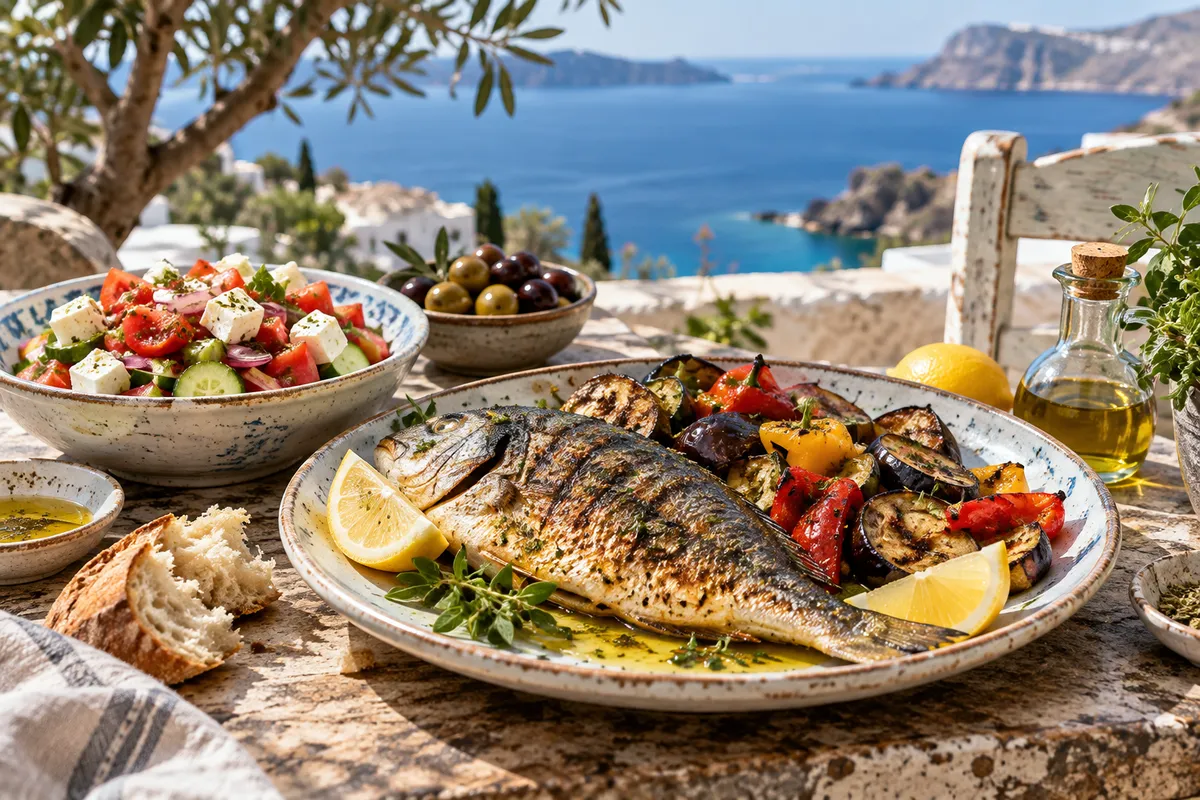
Picture a meal of grilled fish, roasted courgettes, a tomato salad and a little olive oil. It has plenty of Mediterranean character without a large serving of pasta or bread. That is the starting point for our approach.
We use “lower carb” as a practical description, not a prescribed daily target. Non-starchy vegetables take up more space. Pasta, rice, potatoes and bread take up less. Protein sources and olive oil help turn vegetables into a proper meal.
What stays on the plate?
There is no single menu shared by every Mediterranean country. Our everyday choices draw on familiar ingredients: vegetables, fish, olive oil, nuts, herbs, eggs, poultry, plain yoghurt and modest servings of pulses.
Beans and lentils contain carbohydrate, but they also bring variety to meals. A spoonful of chickpeas in a chopped salad is different from making a large plate of starch the centre of lunch. The same goes for fruit: berries or a small piece of fruit can fit without needing juice or sweetened drinks.
What changes?
The biggest change is the default accompaniment. Instead of automatically adding rice or bread, ask which vegetables would work. Roasted peppers with lemon chicken, cauliflower with a tomato sauce, or aubergines with a lentil topping all offer a starting point.
You can still include a small portion of wholegrain starch if it suits you. This is an adaptable pattern, rather than a demand to remove every food containing carbohydrate.
How it differs from traditional Mediterranean guidance
Traditional Mediterranean guidance commonly includes wholegrains and more pulses. This website deliberately puts less emphasis on starchy foods. Research on a traditional Mediterranean pattern does not automatically prove that every lower-carb adaptation has the same effects.
We do not claim that this approach guarantees weight loss, cures disease or suits everyone. Food quality, total intake, enjoyment and your individual circumstances all matter.
Choose one place to begin
Start with a familiar dinner. Keep the protein and sauce, add another vegetable and reduce the usual serving of starch. Notice whether the meal is satisfying and easy enough to repeat. Then try another simple swap.
If you take diabetes medication, speak with your healthcare team before making a substantial reduction in carbohydrate. Do not adjust medication yourself.
Further reading
- NHS London: Mediterranean eating plan
- The Dudley Group NHS Foundation Trust: Diet and type 2 diabetes
Put the ideas into practice with our guides.
Explore the guides